
Products
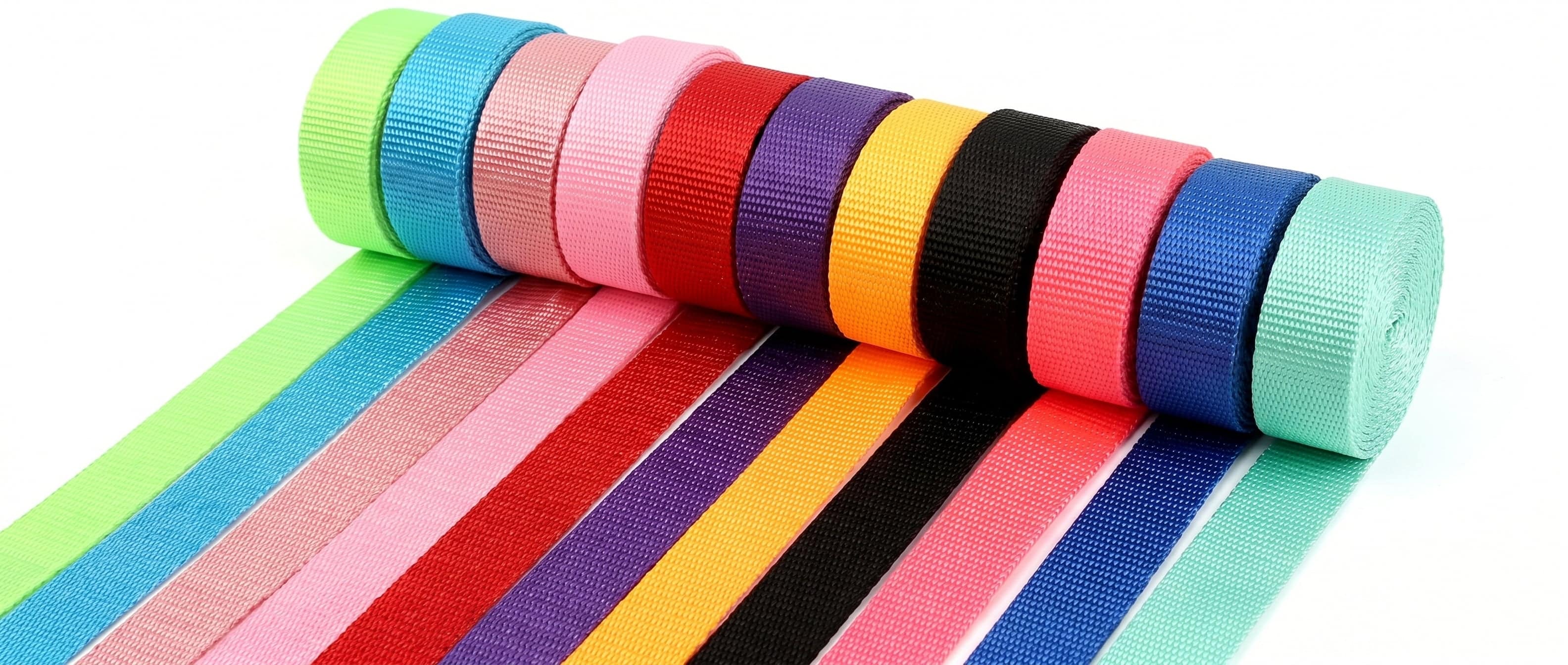
Polypropylene Webbing
Lightweight, Float-Capable, Naturally Resistant — Color-Integrated by Material Design
Polypropylene (PP) is one of the two most widely used fibers in juvenile webbing globally — alongside polyester. Each serves a distinct set of applications, and the choice between them is rarely a matter of quality. It is a matter of fit.
Where polyester dominates load-bearing safety harnesses, polypropylene dominates edge bindings, accessory straps, and applications where the material's native properties — low weight, water resistance, biological stability — are part of the engineering requirement.
We produce polypropylene webbing exclusively in solution-dyed form. The reason is structural: polypropylene's molecular chemistry does not support conventional aqueous dyeing. Solution dyeing is the only process that delivers reliable color performance in this fiber.
Material Properties
- Lowest density among commercial synthetics 0.91 g/cc — allowing thinner and lighter webbing at equivalent coverage.
- Floats in water Specific gravity below 1.0 — an inherent property no polyester or nylon webbing can replicate.
- Effectively hydrophobic Moisture regain near zero; immune to mildew and bacterial degradation.
- Excellent chemical resistance Stable across most acids, alkalis, and common cleaning agents.
- Acceptable tensile strength for non-primary load Engineered for edge binding and applications where polyester carries the primary load.
- Lower melting point than polyester Approximately 165°C vs 260°C — important consideration for downstream processing.
- UV-sensitive without stabilization Requires UV-stabilized formulations for sustained outdoor use.
These properties make polypropylene the right material for a defined set of juvenile applications — not a substitute for polyester, but a parallel choice.
Specifications
Technical Data
| Property | FDY 300D | FDY 600D | FDY 900D | High-Tenacity FDY 1000D | Specialty FDY |
|---|---|---|---|---|---|
| Tenacity (g/denier) | 4.5 – 5.5 | 5.0 – 6.0 | 5.5 – 6.5 | 7.0 – 8.5 | 5.0 – 7.5 |
| Elongation at Break (%) | 18 – 28 | 18 – 25 | 16 – 22 | 12 – 18 | 15 – 25 |
| Shrinkage at 130 °C (%) | 3.0 – 6.0 | 3.0 – 6.0 | 2.5 – 5.5 | 2.0 – 4.5 | 2.0 – 5.0 |
| Melting Point (°F) | 320 – 340 | 320 – 340 | 320 – 340 | 320 – 340 | 320 – 340 |
| In Flame | Burns slowly, melts and drips | Burns slowly, melts and drips | Burns slowly, melts and drips | Burns slowly, melts and drips | Burns slowly, melts and drips |
| After Flame | Continues burning if ignition source remains | Continues burning if ignition source remains | Continues burning if ignition source remains | Continues burning if ignition source remains | Continues burning if ignition source remains |
| Chemical Resistance | Excellent across acids, alkalis, and most organic solvents | Excellent across acids, alkalis, and most organic solvents | Excellent across acids, alkalis, and most organic solvents | Excellent across acids, alkalis, and most organic solvents | Excellent across acids, alkalis, and most organic solvents |
| Specific Gravity (g/cc) | 0.91 | 0.91 | 0.91 | 0.91 | 0.91 |
| Moisture Regain (%) | < 0.1 | < 0.1 | < 0.1 | < 0.1 | < 0.1 |
| Application Profile | Narrow edge binding, decorative trim | General-purpose binding, accessory straps | Wider binding, moderate-load accessory | Load-bearing, weight-critical | UV-stabilized, antimicrobial, modified |
- FDY
- = Fully Drawn Yarn
- 300D – 1000D
- = Yarn linear density (denier)
Reference data based on industry-standard polypropylene yarn testing. Yarn-level specifications confirmed against material supplier datasheets; finished webbing performance verified through accredited third-party testing (SGS / Bureau Veritas / Intertek) on a per-product basis.
Material Specimens
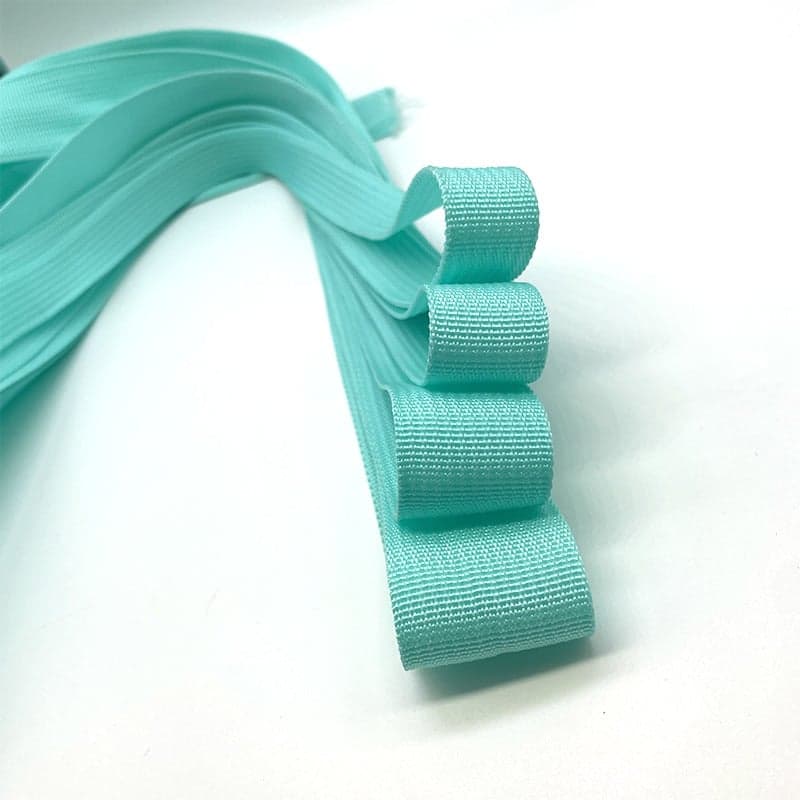
Polypropylene yarn and webbing
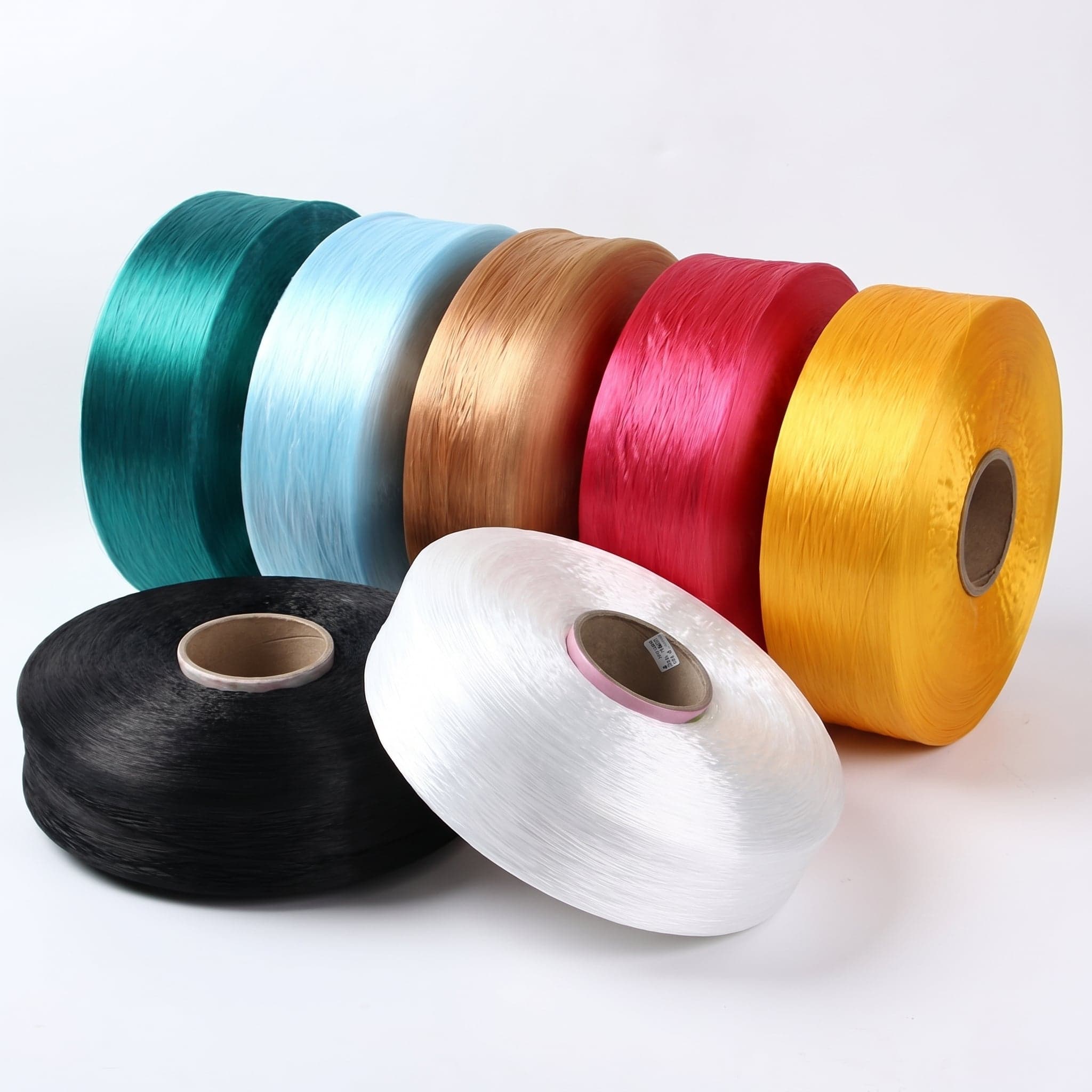
Polypropylene yarn specimen
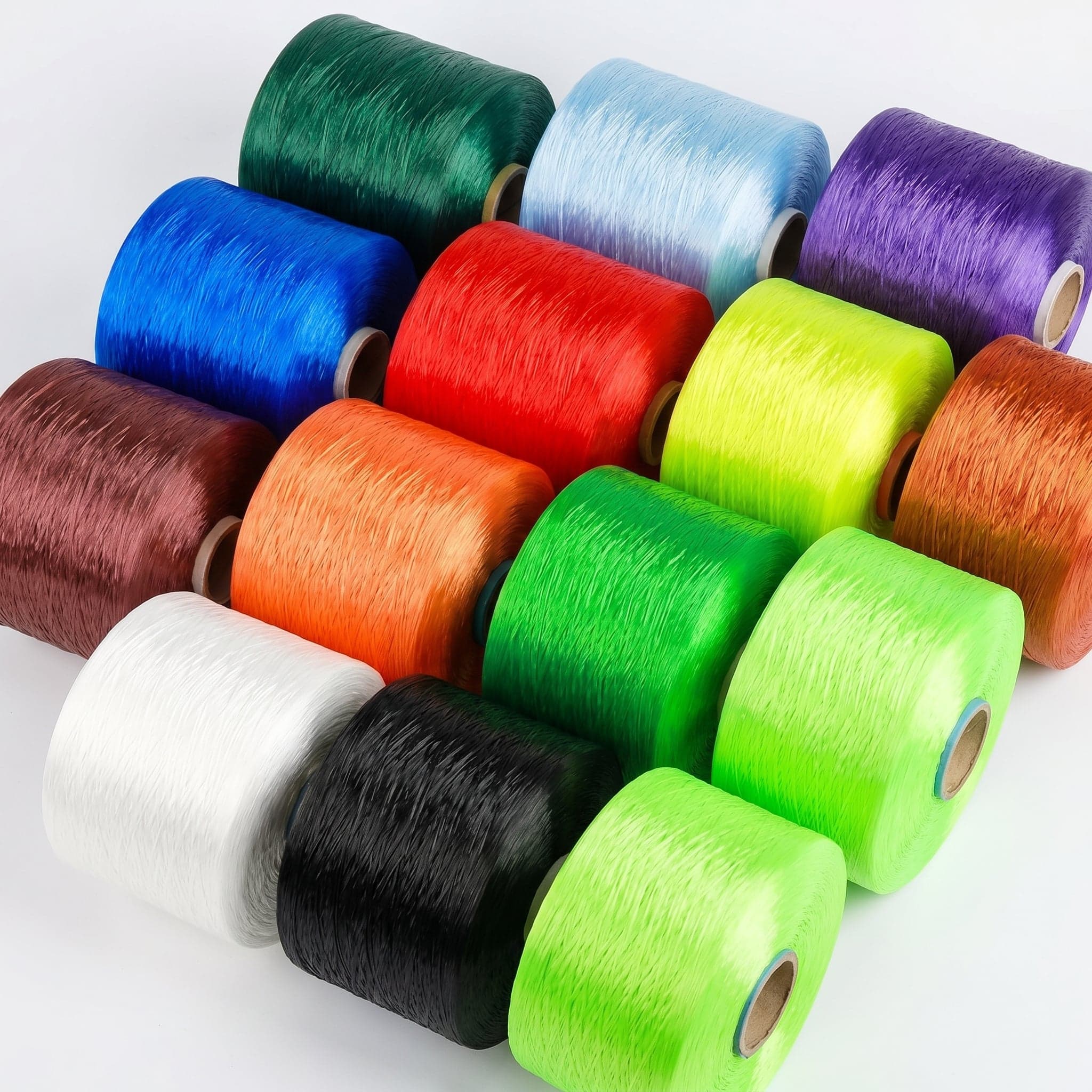
Polypropylene yarn specimen
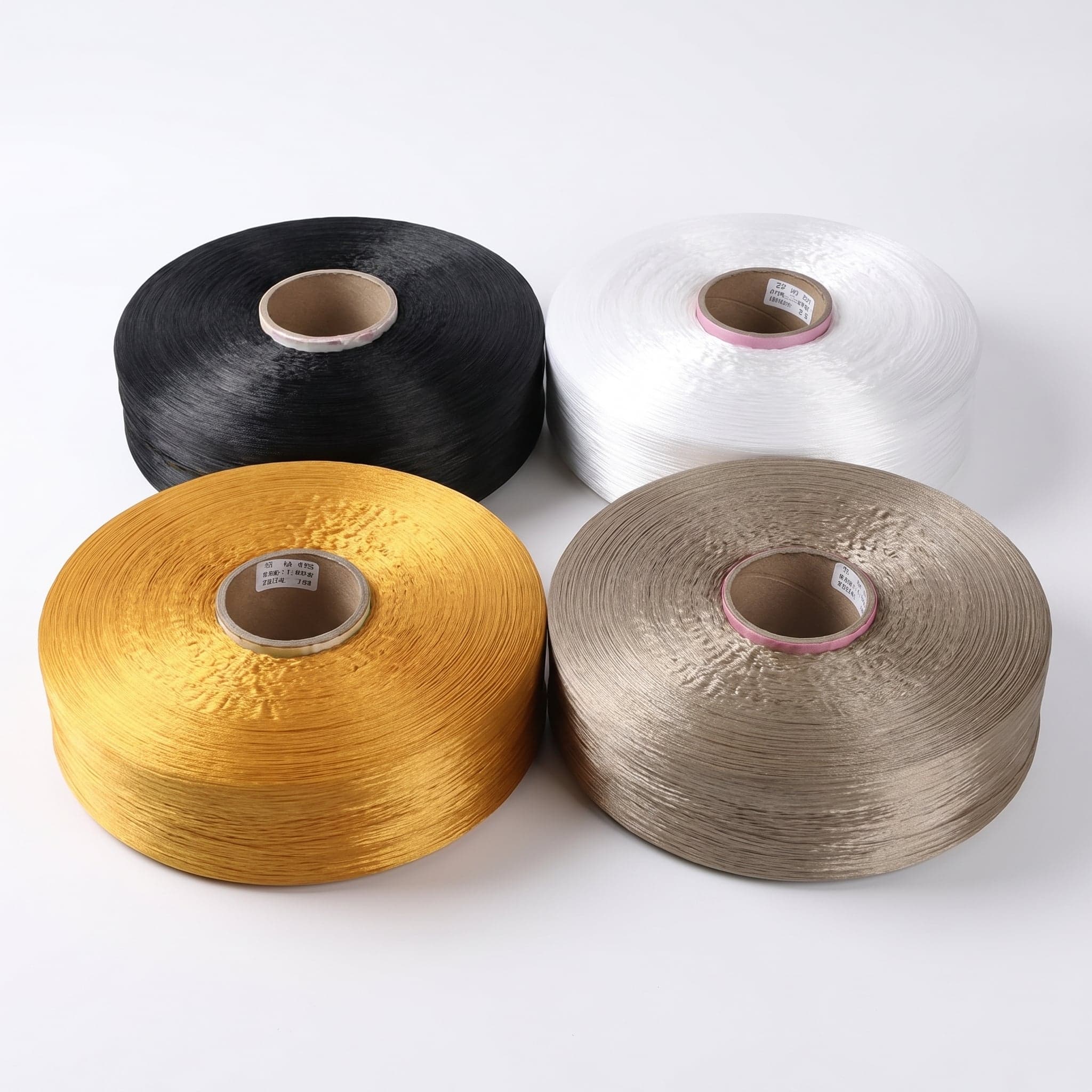
Polypropylene yarn specimen
Solution-dyed polypropylene across constructions and finished webbing.
On Solution Dyeing Polypropylene
Polypropylene's molecular structure is non-polar and crystalline. It does not absorb conventional textile dyes through aqueous processes. Piece-dyeing polypropylene is technically possible only through specialized chemistry, with poor color uptake and limited fastness performance.
For this reason, the global polypropylene textile industry relies almost universally on solution dyeing — pigment integrated into the polymer melt before fiber extrusion. This is the industry standard, not a premium choice.
What we offer is consistency with that standard, applied at juvenile-grade quality:
Color permanence is intrinsic
Pigment is part of the fiber, not applied to it.
Dye-lot variation is structural
Color is determined by masterbatch formulation.
No aqueous dye effluent
The coloring process generates no wet-process waste.
Color fastness approaches the theoretical maximum
For this fiber class.
Our polypropylene production aligns with the material's native characteristics.
Yarn Selection Within Polypropylene
We use polypropylene FDY (Fully Drawn Yarn) exclusively for our webbing applications. Five primary constructions cover the application range:
Standard FDY 300D
Narrow edge bindings, light-weight accessory webbing, decorative trim.
Standard FDY 600D
General-purpose juvenile bindings, accessory straps, pet applications.
Standard FDY 900D
Wider edge bindings, moderate-load accessory webbing.
High-Tenacity FDY 1000D
Load-bearing applications where weight must remain below polyester equivalents.
Specialty FDY
UV-stabilized, antimicrobial, or otherwise modified formulations for specific application requirements.
Yarn construction is selected against the application's load profile, environmental exposure, and processing requirements.
Where Polypropylene Webbing Fits
Our polypropylene webbing is engineered for the following application categories. Each represents a distinct set of performance requirements, addressed through specific yarn and weave choices.
Juvenile Webbing
Solution-dyed polypropylene webbing engineered for juvenile applications — edge bindings, accessory straps, water-adjacent products, and lightweight juvenile gear. Compliant with international juvenile safety and chemical standards.
Additional application categories — outdoor and technical webbing, specialty industrial — will be added as our product line expands.
Looking for Specifications That Aren't Listed?
Custom width, thickness, tensile rating, color, finish — part of our daily work. Direct technical communication with our owner-operator is part of how we work.